

Last updated: October 2026 | Checked against the UK Summary of Product Characteristics. This guide is general information, not medical advice.
How to read this page
Modafinil is one of the better-studied wakefulness medicines, with trial data from 1,500+ patients and two decades of post-marketing surveillance. That does not make it side-effect free. Below: what the UK product literature (Summary of Product Characteristics, SmPC) documents, at the frequencies it assigns – very common (at least 1 in 10), common (1 in 100 to 1 in 10), uncommon (1 in 1,000 to 1 in 100), rare (1 in 10,000 to 1 in 1,000), and “not known” (cannot be estimated from available data).
Very common and common (from the UK SmPC)
Very common (at least 10%):
- Headache – the most commonly reported reaction, affecting approximately 21% of patients; usually mild or moderate, dose-dependent and disappears within a few days
Common (1% to under 10%):
- Decreased appetite
- Nervousness, insomnia, anxiety
- Depression, abnormal thinking, confusion, irritability
- Dizziness, somnolence (sleepiness), paraesthesia
- Blurred vision
- Tachycardia (raised heart rate), palpitations
- Vasodilatation
- Abdominal pain, nausea, dry mouth, diarrhoea, dyspepsia, constipation
- Asthenia (weakness), chest pain
- Raised liver enzyme levels in blood tests
Uncommon (0.1% to under 1%)
- Pharyngitis, sinusitis
- Eosinophilia, leucopenia (blood-count changes)
- Minor allergic reactions (e.g. hayfever-like symptoms)
- Raised cholesterol, raised blood sugar, diabetes mellitus, increased appetite
- Sleep disorder, emotional lability, decreased libido, hostility, depersonalisation, abnormal dreams, agitation, aggression, suicidal ideation
- Tremor, vertigo, dyskinesia, hyperkinesia, amnesia, migraine, hypertonia
- Abnormal vision, dry eye
- Extra heartbeats, arrhythmia, bradycardia
- Raised blood pressure, lowered blood pressure
- Breathlessness, cough, asthma, nosebleeds, rhinitis
- Flatulence, reflux, vomiting, difficulty swallowing, mouth ulcers
- Sweating, rash, acne, itching
- Back pain, neck pain, muscle and joint aches
- Menstrual disorder
- Swollen ankles, thirst
- Abnormal ECG, weight changes
Rare (0.01% to under 0.1%)
- Hallucinations, mania, psychosis
Frequency not known (documented post-marketing, cannot be estimated)
These are the reasons modafinil carries specific regulatory warnings:
- Serious skin reactions. Erythema multiforme, Stevens-Johnson Syndrome, Toxic Epidermal Necrolysis and DRESS syndrome are documented post-marketing. The UK leaflet carries a prominent rash warning: any rash, however mild, means stopping the medicine and seeing a doctor promptly. (In trials, rash leading to discontinuation was seen mainly in paediatric patients; no serious skin rashes were reported in adult trials, but the post-marketing cases exist.)
- Allergic and anaphylactic reactions. Angioedema, urticaria, hypersensitivity reactions and anaphylaxis are documented. Swelling of face, lips or throat is a stop-and-call-999 presentation.
- Delusions. Documented post-marketing; hallucinations, mania and psychosis sit in the rare band above. Psychiatric history is a caution the prescriber must weigh.
(Cardiac events are covered in the frequency bands above: chest pain is a common reaction and abnormal ECGs are uncommon; uncontrolled moderate-to-severe hypertension and cardiac arrhythmias are outright contraindications.)
Contraindications (do not take, per the UK SmPC)
- Hypersensitivity to modafinil or any ingredient
- Uncontrolled moderate to severe hypertension
- Cardiac arrhythmias
Cautions (prescriber must weigh, per the UK SmPC)
- History of psychosis, mania or severe depression (psychiatric monitoring advised)
- History of serious rash from modafinil or armodafinil – never re-start
- Pregnancy: the product literature advises against use; the MHRA has flagged an increased risk of congenital malformations with use during pregnancy. Effective contraception is advised for women of childbearing potential (see interactions below). Modafinil should not be used during breastfeeding.
- Liver impairment: dose adjustment may be needed
Long-term use: what the data shows
- The two 40-week open-label extension studies reported headache (13%), nervousness (8%) and nausea (5%) as the most common treatment-related adverse events.
- The product literature addresses psychiatric monitoring and notes reports of dependence with chronic use. There is no well-characterised withdrawal syndrome in the UK literature, but stopping after long use should be discussed with the prescriber rather than done abruptly on your own.
- MHRA safety advice asks prescribers to monitor blood pressure and heart rate at regular intervals during treatment. Long-term cardiovascular safety in healthy users is less well mapped than the short-term picture.
Interactions
Modafinil is metabolised by the liver; its chief metabolite, modafinil acid (40-50% of the dose), has no pharmacological activity. The effective elimination half-life after multiple doses is about 15 hours. Interaction-wise, the SmPC documents CYP3A4/5 induction and CYP2C19 inhibition (with possible CYP2C9 suppression). Practical consequences:
Hormonal contraceptives (the big one):
- The effectiveness of steroidal contraceptives may be impaired (CYP3A4/5 induction). The SmPC recommends alternative or concomitant contraception during treatment, continued for two months after stopping modafinil. MHRA guidance accepts several non-interacting options (for example the LNG-IUS or depot progestogen injections); the copper IUD and barrier methods are unaffected by the enzyme induction. This does not mean barrier methods alone provide sufficiently reliable contraception; MHRA describes condoms alongside existing contraception in a particular short-term scenario. Agree a suitable method with your contraception service before starting modafinil.
Medicines whose levels can RISE (prescriber may adjust dosing):
- Phenytoin: clearance may be decreased; level monitoring is advised.
- Diazepam, propranolol, omeprazole: reduced clearance is possible.
- Tricyclic antidepressants and SSRIs: in patients who are poor CYP2D6 metabolisers, lower antidepressant doses may be needed.
- Warfarin: clearance may be decreased; prothrombin times (INR) should be monitored regularly during the first two months and after dose changes.
Medicines whose levels can DROP:
- Potent CYP inducers such as carbamazepine and phenobarbital can reduce modafinil levels.
- CYP3A4/5 substrates that undergo significant gut-wall metabolism (for example ciclosporin, some HIV-protease inhibitors, midazolam, triazolam, buspirone, most calcium channel blockers and statins) may fall in level; a documented ciclosporin case needed dose adjustment.
Combos requiring care:
- Any stimulant (including high caffeine intake): overlapping cardiovascular effects; responses vary between people.
Who reports side effects to whom
UK-licensed products carry the MHRA Yellow Card route for reporting suspected side effects, and suspected reactions to unlicensed products can also be reported. The practical difference is that unlicensed grey-market products have not been through UK quality and safety assessment.
Common questions
How common are modafinil side effects? Headache affects around a fifth of patients (21% in trials) and is the single most common reaction; the SmPC describes it as usually mild or moderate and disappearing within a few days. The remaining reactions span the common, uncommon and rarer bands listed above.
Does modafinil cause anxiety? Yes – anxiety is a documented common effect (1-10% band). Caffeine may also contribute to anxiety; individual responses vary.
Can modafinil cause hair loss? Hair loss is not listed in the cited UK SmPC.
Is modafinil safe long-term? The long-term open-label data shows a broadly stable profile, but safe is a prescriber judgement based on your history. Long-term healthy-user cardiovascular data is the thinnest part of the evidence base.
What should I do about a rash? Stop the medicine and see a doctor the same day. The leaflet’s urgent warnings cover rash as well as allergic and psychiatric symptoms – the reactions they guard against are documented post-marketing and can be severe.
Related reading on this site
Products referenced
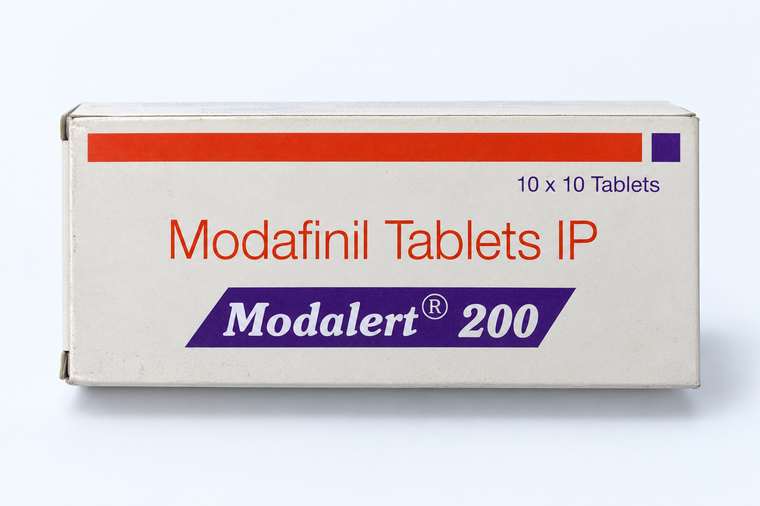
- Modalert 200mg (modafinil)
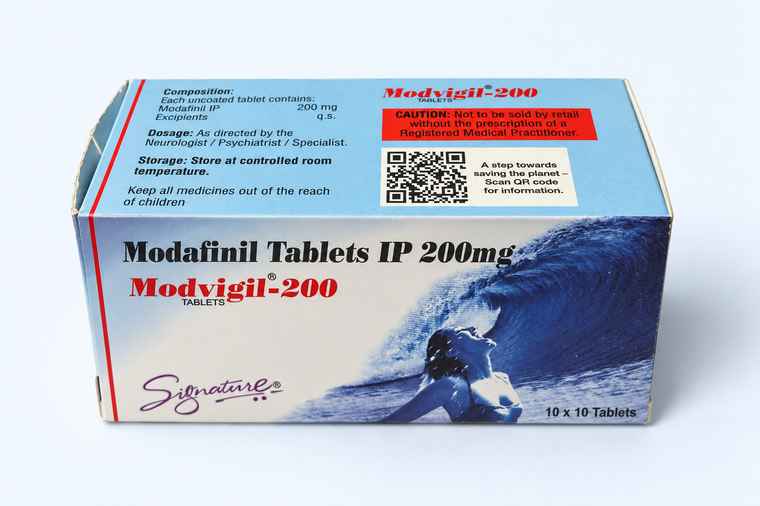
- Modvigil 200mg (modafinil)
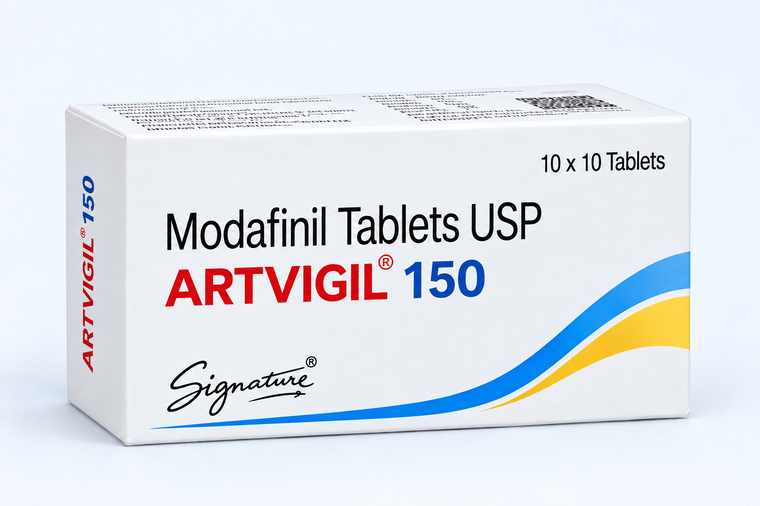
- Artvigil 150mg (armodafinil)
- Waklert 150mg (armodafinil)
This article is general information and does not replace advice from a qualified clinician. If you experience chest pain, breathing difficulty, facial swelling or any rash while taking modafinil, stop the medicine and seek medical help.